
Employment Application Apply
Choosing the best Carton Flow Racking Systems in China requires more than comparing prices, beam sizes, or supplier catalogs. The real question is simple: will the system keep fast-moving cartons visible, reachable, and correctly rotated during every shift?
The 2024 MHI Annual Industry Report found that 55% of supply chain professionals planned to increase technology investment. Its findings reflect a wider pressure for faster fulfillment and better warehouse productivity. Meanwhile, the 2024 LogisticsIQ warehouse automation research reported continued growth in warehouse automation adoption, driven by labor shortages and rising order volumes. These figures do not prove that carton flow is always the answer. They show why storage design deserves closer evaluation.
John J. Bartholdi III, a respected warehouse systems researcher and co-author of Warehouse & Distribution Science, states, “The objective of a storage policy is to minimize the cost of replenishment and picking.” That principle fits carton flow closely. A well-designed lane lets operators load cartons from the rear and pick from the front. Rollers support smooth movement. Dividers reduce product mixing. Clear labels make errors easier to spot.
Small details matter. A 1.2-meter lane may suit one SKU, but restrict another. Heavy cartons can expose weak rollers. Poor slotting can turn an efficient rack into a daily bottleneck. We should admit this: no Chinese supplier can offer the best system without understanding your carton dimensions, SKU velocity, floor space, and picking method. This guide compares leading solutions through those practical conditions, not through marketing claims alone.
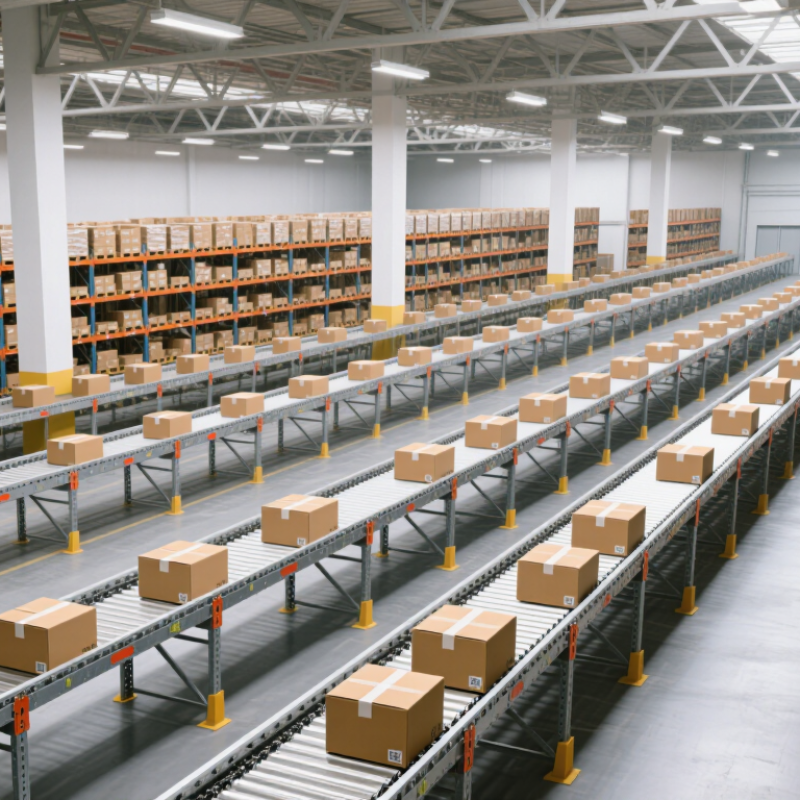
A carton flow racking system is a dynamic storage structure for cartons, totes, and small cases. It uses slightly inclined roller lanes, allowing products to move toward the picking face by gravity. Operators load stock from the rear and pick orders from the front. This arrangement supports FIFO rotation, where older inventory leaves before newer stock.
In Chinese warehouses, these systems commonly serve e-commerce, spare-parts, food, and light manufacturing operations. A reliable design includes strong frames, smooth rollers, lane dividers, and adjustable feet. Brake rollers can control carton speed and reduce impact at the front. I have found that carton size matters more than many buyers expect. Small cartons may tilt, while soft packages can jam between rollers. The rack must match actual packaging, not a catalogue estimate.
Good systems improve picking visibility and reduce unnecessary walking. They also make replenishment easier because loading and picking happen on opposite sides. However, gravity does not solve every warehouse problem. Dust, uneven cartons, and poor lane maintenance can reduce flow. This part is often underestimated. Teams should test representative cartons under real operating conditions before installation. Load capacity, aisle width, worker reach, and fire-safety requirements also need professional review. A thoughtful layout may use carton flow lanes for fast movers, while slower items remain in static shelving. No design is perfect. Regular inspection still matters.
Carton flow racking uses slightly inclined roller lanes to move cartons toward the picking side. Workers load cartons from the rear and retrieve them from the front. Gravity does the movement.
In Chinese warehouses, this layout often supports fast-moving goods, spare parts, food packaging, and small retail items. A loaded carton rolls forward when the carton ahead is removed. Separators keep different stock-keeping units in fixed lanes. Clear labels reduce picking mistakes. Simple, but effective.
Warehouse teams usually apply first-in, first-out rotation by loading newer cartons behind older ones. Adjustable lanes fit different carton widths and weights. Steel frames carry the structure, while brakes or speed controllers manage movement on longer lanes. Operators should check roller alignment, carton strength, and aisle clearance during routine inspections. Small errors matter.
Practical installation needs local measurements. Chinese warehouses may have uneven floors, compact aisles, or seasonal humidity. These conditions can affect rolling speed and carton stability. A lane that works well in a dry facility may perform poorly near loading doors. That is easy to overlook.
The system is not flawless. Heavy cartons can stop halfway, while weak cartons may deform under pressure. Workers need training, even with a simple gravity design. Regular checks help identify damaged rollers, loose dividers, and overloaded lanes before they interrupt picking work.
Carton flow racking uses inclined roller tracks so cartons move by gravity from the replenishment side to the picking side. The best configuration depends on carton size, SKU variety, lane depth, and the required stock rotation method. In practice, carton flow lanes commonly use a 3–5% slope, while lane capacity varies with carton dimensions and rack depth.
What Are the Best Carton Flow Racking Systems in China?
Which Carton Flow Racking Types Are Available?
Carton flow racking uses inclined lanes to move cartons toward the picking face. The most common type is roller-bed flow racking. Steel rollers support heavier cartons and reduce pushing effort. It suits products with firm bases and steady daily movement. Wheel-bed racking uses narrow wheels instead. It works well for lightweight cartons, plastic totes, and small packages. However, soft carton bottoms may catch between the wheels.
Gravity roller flow racks provide smoother movement for medium and heavy cartons. Lane dividers keep different stock-keeping units in position. Some systems include braking rollers, which control carton speed on longer lanes. This detail matters when cartons contain glass or sensitive equipment. Split-lane designs offer flexible storage for small quantities. Adjustable lanes also help warehouses handle changing carton widths.
Flow-through racking has picking access on both sides. It supports first-in, first-out rotation when receiving and dispatch areas are separate. Single-sided flow racks need less floor space and fit wall-based picking zones. In practical installations, shelf slope, roller spacing, and carton weight must be tested together. A lane that moves perfectly with one carton may stop another. That is often overlooked. Operators should test the heaviest and lightest cartons before approving the final layout. Maintenance teams also need access to rollers, dividers, and stop mechanisms. A slightly slower lane can be safer and more reliable than an aggressive slope.
| Carton Flow Racking Type | Operating Principle | Typical Carton Load | Stock Rotation | Recommended Applications | Main Advantages | Key Limitations |
|---|---|---|---|---|---|---|
| Gravity Roller Carton Flow Rack | Cartons move from the loading side to the picking side on slightly inclined roller tracks under gravity. | Commonly about 5–80 kg per carton, depending on roller design, carton base, and lane width. | First-in, first-out (FIFO) | Order picking, e-commerce fulfillment, spare parts, food distribution, and fast-moving stock. | Good product visibility, high picking density, reduced walking distance, and automatic carton replenishment. | Requires cartons with reasonably flat and rigid bases; roller spacing and slope must be matched to the load. |
| Wheel Track Carton Flow Rack | Cartons travel over multiple small wheels mounted in parallel tracks. | Usually suitable for light to medium cartons, approximately 3–40 kg per carton. | FIFO | Small-item picking, apparel, consumer goods, light components, and carton-based kitting. | Lower rolling resistance for lightweight packages, flexible lane configuration, and efficient use of vertical space. | Less suitable for very heavy loads, uneven carton bottoms, or damaged packaging. |
| Adjustable Carton Flow Rack | Removable or adjustable dividers and roller tracks allow lane widths and product positions to be changed. | Commonly designed for approximately 5–80 kg per carton, subject to the selected components. | FIFO | Warehouses handling multiple carton dimensions or frequently changing product assortments. | Supports changing SKUs, improves space utilization, and reduces the need for fixed-size storage lanes. | Adjustment takes time, and incorrect lane settings can cause carton jams or unstable movement. |
| Push-Back Carton Flow Rack | A new carton is pushed backward on nested carts or rollers when the front carton is picked. | Often used for medium loads of approximately 10–80 kg per carton. | Last-in, first-out (LIFO) | High-density storage of reserve cartons where FIFO is not mandatory. | Single-aisle access, high storage density, and fewer replenishment aisles than conventional shelving. | Not ideal for date-sensitive inventory; requires controlled loading and unloading to prevent product impact. |
| Pallet-Fed Carton Flow Rack | Pallets are stored on the replenishment side while individual cartons are picked from flow lanes on the opposite side. | Carton lanes commonly handle about 5–80 kg per carton; pallet loads may be approximately 500–1,000 kg per position, subject to design. | FIFO | High-volume distribution centers, supermarket supply, beverage handling, and fast-moving consumer goods. | Combines reserve pallet storage with carton picking and reduces replenishment travel. | Needs more floor height and careful structural design; forklift access must be coordinated with picking operations. |
| Multi-Level Carton Flow Rack | Several levels of carton flow lanes are installed vertically with stairs, platforms, or order-picking access equipment. | Commonly about 5–60 kg per carton, depending on deck, beam, and lane specifications. | FIFO | E-commerce, apparel, medical supplies, small parts, and operations with many active SKUs. | Maximizes vertical space, creates a large number of picking faces, and supports high SKU variety. | Requires appropriate access and safety provisions; replenishment and picking routes must be carefully planned. |
| Flow Rack with Pick-to-Light Integration | Carton flow lanes are combined with electronic lights or displays that identify the picking location and quantity. | Typically used for light to medium cartons, approximately 3–40 kg per carton. | Usually FIFO | High-throughput e-commerce, electronics accessories, pharmaceuticals, and small-item order fulfillment. | Improves picking speed and accuracy while providing real-time task guidance. | Higher initial investment and dependence on power, software, and system maintenance. |
Note: Load ranges are general planning references rather than universal specifications. Final capacity, lane length, roller spacing, slope, frame dimensions, and safety requirements should be verified through an engineering assessment based on the actual carton size, weight, packaging condition, and operating method.
Comparing China’s best carton flow racking systems requires more than checking price. Start with carton weight, package dimensions, and daily order volume. Measure the widest and smallest cartons carefully. A shelf designed for 600-millimeter cartons may perform poorly with narrow boxes. Small gaps matter.
Examine the roller track, frame strength, and lane adjustment range. Steel rollers suit heavier cartons, while plastic rollers can reduce cost for lighter goods. Ask for load tests using your actual cartons, not sample boxes.
Check the working angle, replenishment height, and picking visibility. Good systems should support smooth first-in, first-out movement without forcing workers to pull cartons manually. They should also include practical guards, labels, and stable connections.
Supplier evaluation deserves equal attention.
Request drawings, material specifications, inspection records, and installation guidance. Visit a production site if possible. Look for consistent welding, clean coating, and organized quality checks.
A low quotation may hide weak rollers or expensive replacement parts. It happens. Compare total ownership cost, including freight, assembly, maintenance, and future expansion. Ask whether lane widths can change after installation. This detail is often overlooked.
Independent load verification can add confidence, but certificates alone do not prove suitability. Test the complete rack layout with real picking tasks, walking distances, and replenishment routines. A system may look excellent on paper yet create congestion during a busy shift. This practical mismatch deserves honest review.
Carton flow racking selection depends on carton size, order frequency, labour, and available space. A high-volume operation may need deep lanes and many pick faces. A smaller warehouse may perform better with shorter lanes and easier replenishment. MHI’s 2024 Annual Industry Report reported that 55% of supply chain professionals face labour-shortage pressure. This makes ergonomic picking and reduced walking increasingly valuable. It does not make automation the automatic answer.
Cost includes more than frames, rollers, and installation. Consider floor preparation, safety barriers, replenishment time, maintenance, and future layout changes. The Material Handling Industry’s safety guidance stresses proper load handling and equipment inspection. Roller pitch must support the smallest carton without tipping. Lane depth should match demand, not available floor space. Overbuilt systems waste capital. Underbuilt systems create jams and product damage.
Tips: Measure real cartons, including damaged packaging. Record daily picks by stock-keeping unit for at least two weeks. Test several carton weights on sample lanes. Ask operators where reaching becomes uncomfortable. I would also calculate travel reduction before approving a design. The estimate may look impressive, yet replenishment can erase the gain. Review fire protection, aisle clearance, and local building requirements with qualified professionals. Performance should be checked after installation, not assumed from a supplier drawing.