
Employment Application Apply
Choosing China’s top Aluminium casement door & windows suppliers takes more than comparing catalogue prices. Product performance depends on frame design, thermal breaks, glazing, hardware, and installation quality. A slim aluminium profile may look refined, yet poor drainage or weak sealing can cause trouble after installation. Small details matter.
The stakes are practical. The 2023 Global Status Report for Buildings and Construction, published by the Global Alliance for Buildings and Construction, reports that buildings accounted for 34% of global energy demand and 37% of energy- and process-related carbon dioxide emissions in 2022. These figures cover the wider building sector, not windows alone, but they underline why envelope performance deserves scrutiny. Buyers should request project-specific thermal data and test reports, then check that the stated configurations match the proposed frames and glass.
This guide examines Chinese suppliers through product range, manufacturing capability, quality documentation, customization, and export support. Ask for clear evidence: profile specifications, hardware brands, glazing options, production lead times, and references for comparable projects. Numbers need context. A test result means little if it covers a different frame or glass combination. Factory photos and polished brochures can help, but they cannot replace verification. Even a careful shortlist has limits; supplier claims should be checked against independent test documents and the project’s climate, building design, and installation conditions.
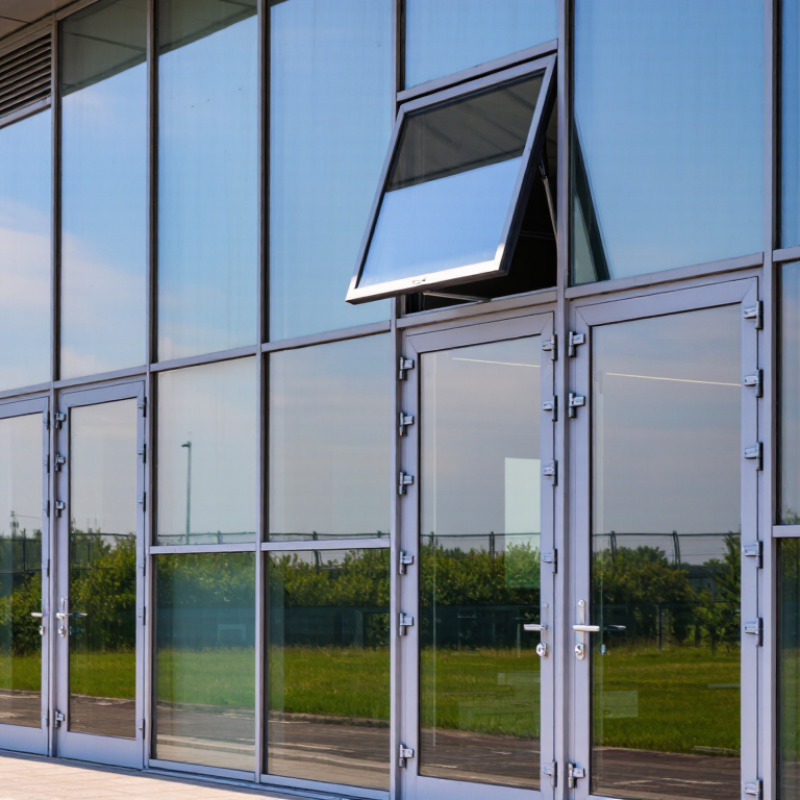
Aluminium casement doors and windows are hinged at the side, so the sash swings open rather than sliding along a track. A handle or crank operates the sash, bringing it against the frame when closed. This compression can create a firm seal, provided the frame is square and the weatherstripping is correctly fitted. Aluminium frames are rigid and can support slim sightlines, though thermal breaks and suitable glazing help limit heat transfer.
The U.S. Department of Energy’s Energy Saver guidance estimates that windows account for about 25–30% of residential heating and cooling energy use. That figure covers windows generally, not casement units alone. It shows why glazing, installation, and air sealing deserve attention alongside frame material. Casement openings can also catch passing breezes, but outward-opening panels need clearance from walkways and nearby objects. Small detail. Not trivial.
Tips: Before ordering, measure the opening at several points and confirm which way each panel should swing. Ask for documented air-leakage and thermal-performance ratings, and check that the stated values apply to the complete window assembly. A strong frame cannot fix poor installation. That part is easy to underestimate.
China’s aluminium casement door and window industry serves housing, commercial construction, and renovation projects. Its supply chain spans aluminium profile extrusion, surface finishing, glass processing, hardware, and final assembly. Many manufacturers can adapt frame depths, opening directions, glazing options, and finishes to project drawings. Yet customization depends on clear specifications, not just a catalogue image. Details matter. Buyers should check profile thickness, thermal-break design, gasket continuity, drainage paths, and hardware capacity. These factors influence frame stiffness, weather resistance, and everyday operation.
Production capacity varies, from workshops making custom units to larger plants using automated cutting and assembly equipment. Automation can improve consistency. It is not automatic. Ask how dimensions are checked, how glass is protected during transport, and whether sample units are inspected before bulk production. For coastal or high-rise projects, wind pressure and corrosion exposure require project-specific review by qualified professionals. No one-size-fits-all. A low price may mean simpler hardware, thinner profiles, or fewer finish options, so compare matching specifications. Installation matters too: uneven openings and poor sealing can undermine a well-made frame. Documentation can be uneven, and that deserves scrutiny. Clear drawings, inspection records, and written tolerances make supplier discussions more reliable.
China’s aluminium casement suppliers generally fit three profiles: integrated extrusion producers, window fabricators, and export-focused project manufacturers. This is not a ranking. USGS Mineral Commodity Summaries 2024 estimated China produced 41 million tonnes of primary aluminium in 2023, about 59% of global output. That scale supports a broad choice of profiles, but it does not guarantee finished-window quality. Metal capacity and system engineering are different strengths.
Integrated producers may manage extrusion, coating, and machining in-house, helping maintain consistency between batches. Fabrication-led suppliers focus on frame assembly, glazing, drainage, and hardware integration. Export-oriented manufacturers may provide technical drawings, protective packaging, and project coordination, though documentation quality varies. Ask for alloy and temper records, coating-thickness reports, section drawings, and air, water, and wind test results. Compare these with references from projects in similar climates.
Performance matters beyond appearance. The IEA’s 2023 buildings tracking report estimates that building operations account for about 30% of global final energy consumption. Thermal breaks, compatible glazing, and well-fitted seals therefore deserve close attention. No single figure predicts field performance. Check test methods and dates, and inspect more than one sample. A showroom corner can look perfect; a full production run may not.
Typical material densities offer useful context when comparing frame materials. Density alone does not determine window quality or supplier performance.
Approximate densities: 6063 aluminium alloy, 2.70 g/cm³; unfilled PVC, 1.38 g/cm³; carbon steel, 7.85 g/cm³. Actual values vary by alloy and material formulation. These are material references, not supplier rankings.
Choosing an aluminium window supplier takes more than comparing prices. Ask for profile drawings that show frame depth, wall thickness, thermal breaks, and drainage paths. Request test reports for air leakage, water penetration, and wind resistance, then check that the tested configuration matches your project. A report for one window size may not represent every design. Small details matter.
Tips: Compare quotations line by line. Confirm glass specifications, hardware grade, surface finish, packaging, and included accessories. Ask for production samples and clear lead-time estimates. Check how the supplier handles damaged goods and replacement parts. Keep answers in writing; vague promises are difficult to verify later.
Review the factory’s quality process, not just its showroom. Ask how staff inspect dimensions, coating consistency, and corner joints during production. If possible, arrange a video walkthrough or independent inspection before shipment. Also discuss installation tolerances with your contractor, since even a well-made frame can perform poorly when fitted incorrectly. No checklist catches everything. I would still allow time for a sample review, because overlooked details often appear only when the parts are in hand.
Choosing a supplier for aluminium casement doors and windows starts with your project conditions, not a catalogue photo. Check the required opening sizes, local climate, wind exposure, and installation details. Ask for documented air-leakage, water-penetration, and structural-performance test results for the proposed configuration. A report for a different frame or glass combination may not prove much. Ask for evidence.
Thermal performance deserves close attention. The UN Environment Programme and GlobalABC reported that buildings and construction accounted for 34% of global energy demand and 37% of energy- and process-related CO₂ emissions in 2022. That makes verified whole-window thermal data more useful than claims about aluminium profiles alone. Compare U-values, glazing options, thermal-break details, and test conditions. Then confirm that the quoted specification matches the drawings and production order.
Supplier checks should continue beyond technical sheets. Request project references, sample corners, finish samples, stated production tolerances, packaging details, and a clear warranty process. If possible, inspect a finished unit or arrange a pre-production review. Look closely at corner joints, locks, drainage paths, and coating consistency. Small details matter. A polished sample can still differ from bulk production; that risk is easy to underestimate. Agree on inspection points, replacement procedures, and delivery responsibilities before placing the order.
Use this weighted checklist to compare shortlisted suppliers. The weights are suggested project-selection priorities, not market statistics. Enter a score from 0 to 5 for each supplier after reviewing documents, samples, and project-specific requirements. Confirm applicable standards and performance targets with the project designer and local building regulations.
| Evaluation Dimension | What to Check | Evidence to Request or Verify | Scoring Guide (0–5) | Suggested Weight | Supplier Score |
|---|---|---|---|---|---|
| Product and standards compliance | Confirm that the proposed aluminium windows and doors are designed and documented for the required application. Check relevant editions and scope of applicable standards, including GB/T 8478-2020 for aluminium alloy doors and windows. | Product specifications, drawings, declarations, and test reports that identify the tested product configuration and applicable standard. | 0 = no supporting documents; 3 = key documents supplied but gaps remain; 5 = complete, consistent documentation for the proposed system. | 15% | _____ / 5 |
| Whole-window performance | Assess thermal transmittance, air permeability, watertightness, and wind-load resistance against the project brief. Compare whole-window results, not profile claims alone. Relevant test methods for exterior doors and windows include GB/T 7106-2019. | Accredited laboratory reports for the specified window type, size, glass, hardware, seals, and opening configuration; project-specific calculations where required. | 0 = no relevant evidence; 3 = partial or not fully matched evidence; 5 = results cover the proposed configuration and meet project requirements. | 15% | _____ / 5 |
| Aluminium profiles and finish | Verify profile dimensions, alloy and temper, wall thickness, surface treatment, and consistency with the specification. GB/T 5237 is a series covering aluminium alloy profiles for architectural use; the relevant part depends on the product and finish. | Profile drawings, material and finish specifications, inspection records, and samples matching the quoted system. | 0 = specifications are absent or unclear; 3 = main details supplied; 5 = traceable specifications and samples align with the project requirements. | 12% | _____ / 5 |
| Glass and hardware configuration | Check glass build-up, thickness, safety-glazing requirements where applicable, opening limits, hinges, locks, handles, and compatibility with the selected frame system. | Glass schedule, hardware schedule, system drawings, samples, and confirmation that the proposed components are included in the quotation. | 0 = major components are unspecified; 3 = configuration is mostly defined; 5 = complete, compatible, and project-matched schedule. | 12% | _____ / 5 |
| Manufacturing quality control | Review incoming-material checks, fabrication tolerances, assembly controls, finished-product inspection, and product identification or traceability. | Quality-control procedures, inspection checklists, sample inspection records, and a factory audit or live production review. | 0 = no verifiable process; 3 = documented controls with limited records; 5 = documented, consistently recorded checks and traceable production. | 10% | _____ / 5 |
| Customization and engineering support | Assess ability to provide shop drawings, interface details, opening schedules, finish samples, and revisions coordinated with the project team. | Sample submittal package, drawing-review workflow, named technical contact by role, and examples of relevant documentation. | 0 = little or no technical support; 3 = basic drawings and coordination; 5 = responsive, complete project-specific engineering support. | 10% | _____ / 5 |
| Production capacity and lead time | Check whether the supplier can meet the required quantities, production sequence, approval milestones, and shipment dates. | Written production schedule, capacity plan for the project, material availability assumptions, and a clear schedule for samples and approvals. | 0 = no credible schedule; 3 = schedule provided with unresolved dependencies; 5 = feasible, detailed schedule aligned with project milestones. | 8% | _____ / 5 |
| Packaging and export logistics | Review protection against handling and transit damage, packing identification, container loading plan, shipping documents, and delivery terms. | Packing specification, loading plan, draft document list, and written confirmation of responsibilities under the agreed delivery terms. | 0 = responsibilities are unclear; 3 = basic packing and shipping plan; 5 = detailed, agreed plan covering protection and shipment documentation. | 7% | _____ / 5 |
| Installation and after-sales support | Determine whether the supplier can provide installation guidance, replacement-part support, maintenance information, and a clear defect-resolution process. | Written warranty terms, service-response procedure, spare-parts policy, installation instructions, and exclusions or limitations. | 0 = terms are missing; 3 = basic terms are provided; 5 = clear, practical support process and contractually defined coverage. | 6% | _____ / 5 |
| Quotation clarity and commercial terms | Compare scope, exclusions, quantities, currency, payment milestones, tooling or sample charges, taxes, delivery terms, and change-order rules. | Itemized quotation, written scope and exclusions, payment schedule, delivery-term definition, and documented variation process. | 0 = substantial ambiguity; 3 = most terms are defined; 5 = comparable, itemized quotation with clear commercial responsibilities. | 5% | _____ / 5 |
| Total suggested weight | 100% | Weighted result: _____ / 5 | |||