
Employment Application Apply
Choosing the best Stainless Welding supplier is not simply a price comparison. It is a quality and risk decision.
The International Stainless Steel Forum reported approximately 58.4 million tonnes of global stainless steel production in 2023. That scale creates intense supplier competition. It also creates uneven performance. A polished website cannot prove weld consistency, traceability, or delivery discipline. Buyers should examine material certificates, welding procedure qualifications, operator records, and inspection evidence. These details matter when a 2-millimeter seam must remain clean, strong, and corrosion-resistant.
Workforce capability is another practical concern. The American Welding Society’s workforce projections have highlighted a potential shortage of up to 330,000 welding professionals in the United States by 2028. Skilled people are not optional. Stainless Welding requires controlled heat input, suitable shielding gas, contamination prevention, and careful finishing. A supplier should explain these controls clearly. Ask for sample welds, non-destructive testing records, and references from comparable projects.
Standards help, but they do not replace judgment. ISO 3834 provides a recognized framework for quality requirements in fusion welding. AWS D1.6 offers guidance for structural stainless steel welding. Still, compliance documents can become outdated, incomplete, or poorly interpreted. I would not pretend that one certificate proves everything. The stronger approach combines audits, production samples, technical conversations, and verified customer feedback. Check the details.
A reliable supplier should communicate tolerances, lead times, surface requirements, and corrective-action procedures before production begins. The best choice is rarely the cheapest quotation. It is the supplier that can repeatedly deliver clean welds, documented materials, stable scheduling, and honest technical answers.
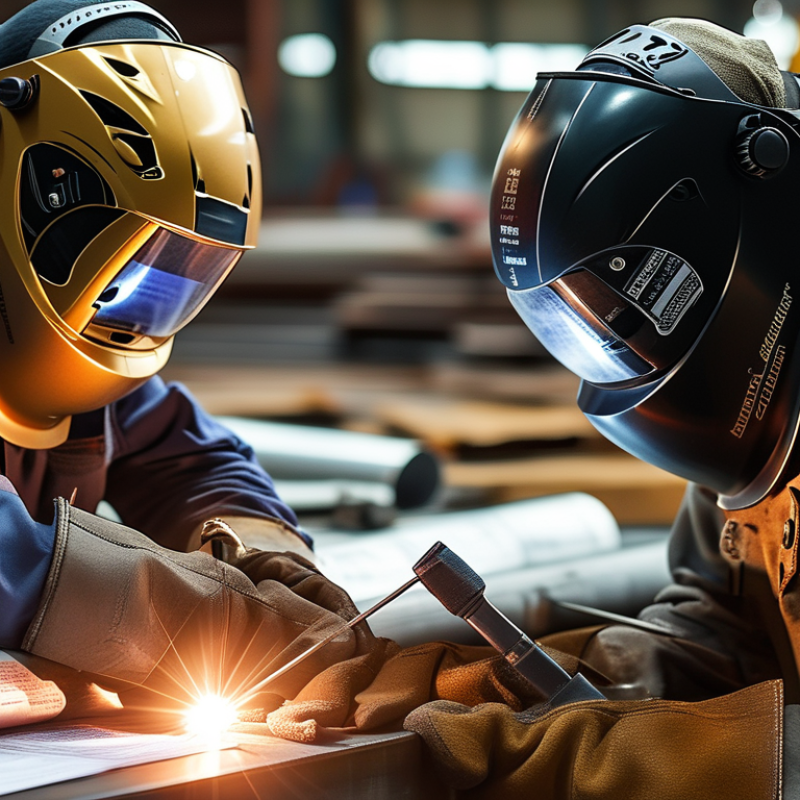
Choosing the best stainless welding supplier starts with clear technical requirements. Specify the stainless grade, material thickness, joint design, and expected service environment. Saltwater exposure may require different protection than indoor equipment. State whether you need TIG, MIG, laser, or orbital welding. Include drawings, dimensions, surface-finish expectations, and acceptable tolerances.
Quality standards should be measurable, not based on attractive photographs. Ask for documented welding procedures, qualified welders, material certificates, and heat-number traceability. Depending on the project, inspection may include visual checks, dye penetrant testing, radiography, or pressure testing. Confirm which standards apply to your equipment and market. A professional supplier should explain limitations clearly, instead of promising perfect results without reviewing the design.
Tips: Request a small sample weld before placing a large order. Check penetration, discoloration, distortion, and cleaning quality. Ask how defects are recorded and corrected. Keep communication in writing. Small details matter.
A polished weld can still contain poor penetration. That is easy to miss. I have seen specifications remain vague because teams focused only on price and delivery. That choice often creates rework later. Leave room for technical review, especially when tolerances are tight or the assembly carries pressure. A reliable supplier should welcome questions, provide inspection evidence, and admit when a requirement needs clarification.
Choosing a stainless welding supplier requires more than comparing prices. In practical audits, I inspect weld samples, traceability records, and operator qualifications. A clean bead can still hide poor penetration. Ask for procedure qualification records, welder certificates, and documented control of heat input.
Certifications provide useful evidence, but they do not replace technical judgment. ISO 3834 shows that a supplier controls welding quality through procedures, personnel, equipment, inspection, and documentation. ISO 9001 supports broader process control. For pressure-related work, qualification under applicable welding codes, such as ISO 15614 or ASME Section IX, may be essential. Check certificate scope and expiration dates. A certificate covering carbon steel does not automatically prove stainless expertise.
Production capability should match your actual risk. Review welding methods, material thickness ranges, joint designs, and post-weld cleaning practices. World Stainless reported approximately 58.4 million tonnes of stainless crude steel production in 2023, according to Stainless Steel in Figures 2024. This scale increases material availability, but it does not guarantee consistent fabrication. Request mill certificates, heat-number traceability, and sample inspection reports. Ask how the supplier prevents iron contamination from carbon-steel tools. I have seen attractive welds fail visual review because brushing introduced surface particles. That detail is easy to overlook. Supplier evaluations should also examine inspection capacity, including dye penetrant testing, radiography, or ultrasonic testing when required. One weakness remains: many buyers focus on certificates and ignore production discipline. That mistake deserves a second look.
| Evaluation Dimension | Measurable Indicator | Recommended Minimum Requirement | Strong Evidence to Request | Buyer Verification Method |
|---|---|---|---|---|
| Stainless Steel Material Expertise | Experience with austenitic, ferritic, martensitic, and duplex stainless steels | Documented procedures for the grades specified in the project, such as 304/304L, 316/316L, 2205, or 410 | Material compatibility matrix, welding procedure specifications, and completed project records | Compare the proposed filler metal, shielding gas, heat input, and post-weld treatment with the material grade |
| Quality Management System | Third-party quality certification and controlled procedures | Current ISO 9001:2015 certification covering fabrication or welding-related activities | Valid certificate, certification scope, issuing-body details, and recent audit status | Confirm certificate validity and ensure the stated scope matches the supplied products |
| Welding Quality Organization | Formal control of welding coordination, procedures, and personnel | ISO 3834 certification or an equivalent documented welding quality system when contract risk requires it | Welding quality manual, welding coordinator qualifications, WPS/PQR index, and welder continuity records | Audit the control of welding parameters, consumables, qualifications, and nonconformities |
| Welding Procedure Qualification | Qualified WPS supported by procedure qualification records | WPS/PQR qualified to the governing code, such as ASME Section IX, ISO 15614, or AWS D1.6/D1.6M | Signed WPS, PQR test results, essential variables, base-metal groups, filler classification, and approved ranges | Check that thickness, diameter, grade, welding process, position, and joint design cover the purchase order |
| Welder and Operator Qualification | Valid qualifications for the required process and position | Current qualification records covering the applicable process, material group, thickness range, and welding position | Welder certificates, continuity logs, visual identification system, and training records | Trace each weld to the qualified welder or operator and verify continuity before production |
| Material Traceability | Ability to maintain heat, batch, and component identification | Full traceability from incoming material through cutting, fabrication, welding, inspection, and shipment | Heat-number records, transfer logs, marked parts, travelers, and material certificates | Perform a sample traceability exercise from a finished component back to the original heat number |
| Material Certification | Chemical composition, mechanical properties, heat treatment, and test results | EN 10204 Type 3.1 inspection certificate or the equivalent certificate specified by the purchase contract | Mill test certificate identifying grade, standard, heat number, dimensions, and actual test values | Match certificate data with markings and verify compliance with the specified ASTM, EN, or ASME material standard |
| Production Equipment | Available welding, forming, cutting, and finishing equipment | Equipment capable of meeting the required thickness, dimensions, tolerances, welding processes, and surface finish | Equipment list, capacity chart, calibration records, maintenance plan, and production photographs or audit access | Confirm maximum part size, welding current range, fixture capacity, and finishing capability |
| Heat Input and Distortion Control | Control of interpass temperature, welding sequence, and dimensional stability | Approved welding parameters, documented interpass-temperature limits, suitable fixtures, and dimensional inspection points | Welding parameter logs, temperature records, distortion-control plans, and inspection reports | Review sample weld records and compare final dimensions with the approved drawing tolerances |
| Inspection and Nondestructive Testing | Coverage of visual, dimensional, surface, and volumetric inspection | Inspection plan based on risk and contract requirements; visual testing should follow an applicable standard such as ISO 17637 | Inspection and test plan, qualified inspectors, calibrated equipment, NDT reports, and acceptance criteria | Verify inspector competence, test coverage, report traceability, and acceptance level such as ISO 5817 where applicable |
| Surface Treatment and Corrosion Protection | Control of weld discoloration, oxide removal, cleanliness, and surface finish | Documented pickling, passivation, mechanical polishing, or electropolishing process as specified by the application | Process instructions, chemical records, surface-roughness results, cleanliness checks, and final inspection photographs | Inspect heat tint, embedded iron, scratches, roughness, weld profile, and compliance with the approved finish |
| Positive Material Identification | Verification that the supplied alloy matches the specified grade | PMI procedure appropriate to the risk; X-ray fluorescence can identify many alloying elements but does not reliably measure carbon | PMI equipment calibration, test records, reference materials, and escalation process for disputed results | Use an independent laboratory or optical emission spectroscopy when carbon content must be distinguished |
| Capacity and Delivery Reliability | Available production capacity, lead-time control, and on-time delivery performance | Capacity plan that covers forecast volume, required delivery dates, inspection hold points, and contingency arrangements | Capacity loading report, production schedule, delivery performance records, and documented recovery plan | Compare promised lead time with historical performance and identify bottlenecks in material, welding, or finishing |
| Nonconformance and Corrective Action | Effectiveness of defect prevention and root-cause management | Formal nonconformance, root-cause, corrective-action, and preventive-action processes | Redacted corrective-action reports, defect trend charts, concession records, and closure evidence | Assess whether corrective actions address process causes rather than only sorting or repairing defective parts |
| Technical Communication | Speed and accuracy of engineering responses | Ability to review drawings, clarify weld symbols, identify material risks, and submit complete technical documentation | Sample design-review comments, submittal index, document-control procedure, and response-time commitment | Issue a sample RFQ or drawing package and evaluate the completeness of the technical response |
Evaluation note: The governing project specification, applicable code, material standard, inspection level, and end-use risk should determine the final acceptance criteria.
Choosing a stainless welding supplier requires more than comparing hourly rates. The welding process must match the part, thickness, and production volume. TIG welding offers clean, controlled seams for thin stainless components. MIG welding can provide faster output on larger assemblies. Laser welding creates narrow heat-affected zones, but it demands precise fit-up and skilled programming.
Material selection also affects performance. Grade 304 suits many indoor and general-purpose applications. Grade 316L may perform better where moisture, salt, or chemicals are present. Ask for material certificates, heat numbers, and full traceability. A supplier should explain filler metal choices clearly. Small differences matter.
Equipment reveals practical capability. Look for calibrated welders, positioners, extraction systems, and inspection tools. Ask whether operators follow documented welding procedures and hold relevant qualifications. Customization should include drawings, prototypes, fixture design, surface finishing, and packaging requirements. I once saw a project delayed because a supplier accepted a drawing without checking bend access. That mistake was avoidable. Good suppliers review tolerances before production, not after defects appear.
Request sample welds and inspect penetration, discoloration, distortion, and surface finish. Reliability also depends on communication. Can the supplier report nonconforming work honestly? Can they adjust a process without hiding the problem? No supplier gets every detail right. However, a transparent correction process often matters more than a perfect first estimate.
A dependable stainless welding supplier should explain its quality control process clearly. Ask how welders are qualified, materials are identified, and finished joints are inspected. Reliable suppliers can provide material certificates, weld procedure records, and inspection reports without hesitation. Testing may include visual inspection, dye penetrant testing, radiographic testing, or pressure checks, depending on the application. Request sample documents before placing a large order. This reveals whether records are precise or merely attractive paperwork.
I have learned that polished claims mean little without traceable evidence.
Lead times should include fabrication, inspection, packaging, and transport. Ask for a written production schedule with realistic checkpoints. A supplier promising delivery in half the usual time may be efficient, or simply optimistic. Clarify how they handle material shortages, rework, and urgent design changes. Delivery reliability is measured over repeated orders, not one successful shipment. Check references from customers with similar stainless grades, weld sizes, and order volumes. Small delays matter. A late component can stop an entire installation.
Tips:
Ask for recent inspection records, not old examples. Confirm the testing standard and acceptance criteria in writing. Request progress photos for complex assemblies. Discuss packaging, moisture protection, and labeling before production begins. Keep communication documented. It prevents confusion, though it cannot remove every risk. Allow a modest schedule buffer; even skilled teams occasionally discover hidden defects. A supplier willing to discuss past mistakes may be more trustworthy than one claiming perfection.
How to Choose the Best Stainless Welding Supplier?
Price deserves careful review, not automatic approval. Compare the same grade, thickness, surface finish, welding method, packaging, and freight terms. Ask whether alloy surcharges can change after quotation. The International Stainless Steel Forum reported 58.4 million tonnes of stainless crude steel production in 2023. That scale creates many suppliers, but not identical quality. A low quote still attracts me. That is where judgment can fail.
Technical support should be visible before purchase. Request welding procedure specifications, qualification records, material certificates, heat-number traceability, and corrosion guidance. A capable engineer should explain distortion control and inspection points in plain language. Warranty terms must state coverage, exclusions, claim deadlines, testing methods, and remedies. Avoid vague promises such as “quality guaranteed.” The supplier’s reputation needs evidence. Check recent customer references, delivery records, corrective-action responses, and independent audit results. ISO’s 2022 Survey recorded over 1.2 million ISO 9001 certificates worldwide, yet certification alone does not prove welding performance.
Tips: Compare three written quotations. Ask for one sample weld. Record every technical promise. Confirm who pays for retesting. Review a past complaint, if the supplier permits it. Visit the workshop when project risk is high. A polished website means little beside clean storage, labeled stainless coils, calibrated equipment, and traceable inspection reports. I would also document small inconsistencies. They may seem harmless, but repeated delays or unclear certificates often predict larger project problems.
This anonymous procurement model uses a 100-point weighting system. Pricing receives the highest weight, while technical support, warranty terms, and supplier reputation provide essential safeguards for quality, continuity, and long-term value. Compare each supplier against the same criteria before making a purchasing decision.