What is a Horizontal Wiped Film Evaporator and How Does It Work?
The horizontal wiped film evaporator is essential for efficient thermal separation processes. This technology is widely applied in industries such as food, pharmaceuticals, and chemicals. According to market reports, the wiped film evaporator sector is expected to grow at a CAGR of over 5% by 2026. This trend reflects a strong demand for energy-efficient solutions that optimize product yields while minimizing heat degradation.
The design of the horizontal wiped film evaporator enhances thermal efficiency. This apparatus features a rotating wiper system. It spreads the liquid film evenly across the evaporator's heated surface. This design promotes optimal heat transfer and reduces the time needed for evaporation. However, actual performance may vary based on operational parameters and system maintenance.
While the benefits are significant, challenges exist. Users must regularly monitor and maintain these systems to prevent issues such as fouling. Proper training is also essential to maximize performance. Understanding the operational nuances can lead to better outcomes in production processes. Thus, the horizontal wiped film evaporator stands as a crucial tool for businesses pursuing efficiency and quality.
What is a Horizontal Wiped Film Evaporator?
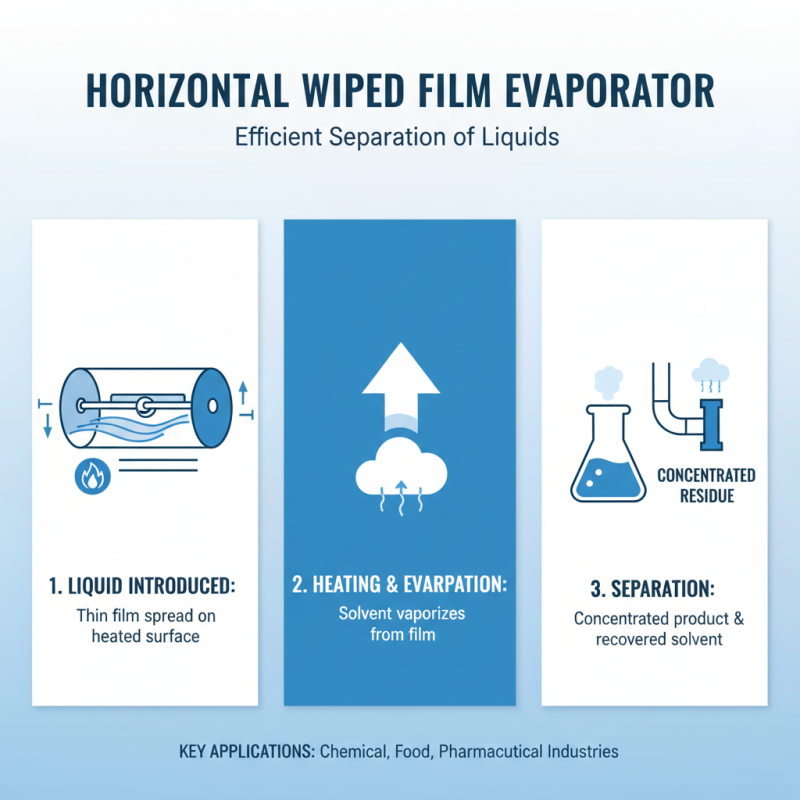
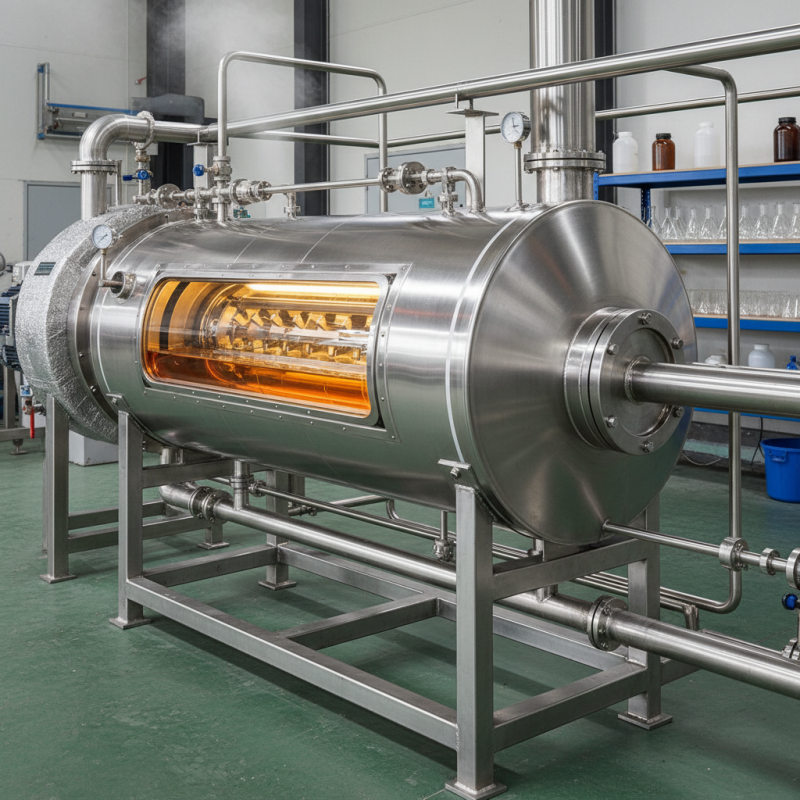
A Horizontal Wiped Film Evaporator (HWFE) is an essential tool in various industrial processes. It is designed to efficiently separate components from liquids through evaporation. The core idea is straightforward: a thin film of liquid is spread over a heated surface. As the film moves horizontally, heat causes the solvent to evaporate, leaving behind concentrated residues.
The design of an HWFE enhances its performance significantly. The horizontal configuration allows for better gravity assistance in draining the liquid. Customized wiper blades ensure a consistent film thickness and eliminate the risk of liquid pooling. This maximizes heat transfer efficiency. Operators can achieve high evaporation rates with reduced thermal decomposition, a common challenge in similar equipment.
However, challenges remain. Maintaining a consistent film thickness can be tricky. Inconsistent feeding rates or improper maintenance can lead to film breakage. Operators must monitor performance closely to ensure optimal efficiency. Furthermore, understanding the thermal properties of the fluids processed is crucial. Each application can reveal new insights, making ongoing adjustment essential. Overall, the HWFE is a powerful tool, with room for optimization and learning.
Key Components and Design Features of Horizontal Wiped Film Evaporators
Horizontal wiped film evaporators are specialized devices designed for efficient thermal separation processes. They play a crucial role in concentrating liquid products. Understanding their key components helps to appreciate their functionality.
One of the main features is the wiping mechanism. This ensures the film of liquid remains thin. Inadequate wiping can lead to product buildup, affecting performance. The cylindrical design allows efficient heat exchange. This structure helps maintain a consistent temperature throughout the process.
Tips: Regular maintenance is essential. Check the wiping blades for wear and tear. Worn blades can result in uneven evaporation rates. Adjust the feed rate based on your product viscosity; it may require trial and error.
Another important component is the heating system. The quality of heated surfaces directly impacts efficiency. It's vital to monitor the temperature closely. Overheating can degrade sensitive products.
Tips: Utilize temperature sensors for real-time monitoring. This prevents potential damage to your materials. Experiment with different heating methods for optimal results. Each method may affect the end product differently.
Working Principle: Mechanisms of Film Formation and Evaporation
The horizontal wiped film evaporator operates on a unique principle that combines film formation and evaporation. In this system, a thin film of liquid is created as the material is spread across a heated surface. A series of wipers ensure even distribution. This design minimizes the liquid retention time, promoting efficient evaporation. The mechanics behind this process are often intricate, yet fascinating.
The interaction between temperature and film thickness plays a crucial role. The thinner the film, the quicker the evaporation. But achieving the ideal film thickness can be challenging. Too thin might result in incomplete evaporation, while too thick can lead to unwanted residue. Operators must constantly monitor these variables for optimal performance. It's essential to balance heating and wiper speed.
Understanding the physics of this system can help refine its efficiency. With the right adjustments, manufacturers can maximize yield and reduce waste. However, the learning curve can be steep. Experimentation is often necessary to find the perfect settings. These trials can help reveal the nuances of evaporation rates and material behavior. It's important to remain adaptable and open to adjustments throughout the process.
What is a Horizontal Wiped Film Evaporator and How Does It Work?
| Parameter |
Value |
Unit |
Description |
| Feed Rate |
50 |
L/h |
The rate at which the feed material is introduced |
| Operating Temperature |
120 |
°C |
Temperature maintained during the evaporation process |
| Pressure |
0.5 |
bar |
Pressure in the evaporator to facilitate evaporation |
| Total Energy Consumption |
10 |
kW |
Energy required for the operation of the evaporator |
| Downtime |
2 |
h/week |
Average downtime for maintenance and cleaning |
| Film Thickness |
0.1 |
mm |
Thickness of the liquid film formed on the evaporator surface |
Applications in Industry: Chemical, Food, and Pharmaceutical Sectors
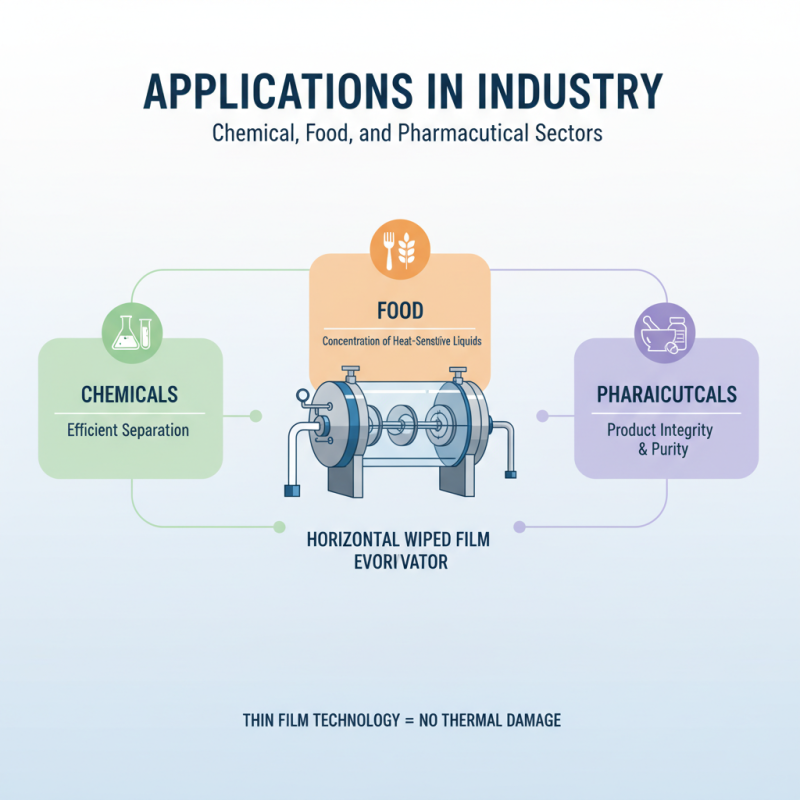
Horizontal wiped film evaporators play a crucial role in various industries, including chemical, food, and pharmaceuticals. They are designed for efficient separation processes. These systems excel in concentrating heat-sensitive materials. The thin film formed during operation ensures that products are not damaged by excessive heat.
In the chemical sector, these evaporators help in recovering solvents. They efficiently handle viscous liquids, allowing for a high recovery rate. This process is crucial for maintaining resource efficiency. Mistakes can occur when not optimizing the operational parameters, which can lead to losses and inefficiencies.
In the food industry, horizontal wiped film evaporators are used for concentrating fruit juices and dairy products. They preserve flavor and nutrients effectively. However, it’s vital to monitor temperature settings closely. Oversights here can result in product spoilage.
In pharmaceuticals, these evaporators assist in the production of active ingredients. The ability to operate under vacuum conditions minimizes thermal damage. Yet, a lack of attention to detail during maintenance may disrupt the process.
**Tips:** Ensure regular maintenance checks to avoid downtime. Monitoring viscosity is crucial for optimal performance. Training staff on best practices can prevent costly errors.
Performance Metrics: Efficiency, Capacity, and Energy Consumption Data
A Horizontal Wiped Film Evaporator is a specialized device used in various industries for efficient separation processes. It operates by creating a thin film of liquid on heated surfaces, leading to rapid evaporation of solvents. This method enhances both efficiency and capacity, making it a popular choice for concentrating viscous liquids.
Performance metrics are crucial when evaluating these systems. Efficiency often includes the overall recovery rate of solvents, which can reach impressive levels. The capacity, or the amount of material processed per hour, can vary based on design and application. Additionally, energy consumption is a significant factor. It is essential to assess the energy used in relation to the output produced. This data helps in optimizing operations.
Tips: Regular maintenance is key for improving efficiency. Check the seals and gaskets frequently to prevent leaks. Additionally, monitoring temperature and pressure can aid in adjusting performance levels effectively. Small deviations can lead to inefficiencies in evaporation rates.
Benchmarking energy consumption against similar systems can provide insights into operational improvements. If energy costs appear high, consider reviewing the heat exchange areas for fouling or inefficiencies. Always reflect on performance data and make informed tweaks to systems for enhanced reliability and effectiveness.
Performance Metrics of Horizontal Wiped Film Evaporators