Employment Application Apply
Choosing the right horizontal wiped film evaporator is not a simple equipment comparison. It is a process decision shaped by viscosity, heat sensitivity, residence time, and product value. A model that performs well with a thin solvent may struggle with a sticky concentrate. That difference matters.
Dr. James R. Fair, a respected chemical engineering authority, once said, “Evaporation is not merely a heat-transfer problem; it is a product-quality problem.” This principle remains practical today. The evaporator must create an even film, control wall temperature, and remove vapour without damaging the material. Operators should examine rotor speed, heating area, condenser capacity, vacuum stability, and cleaning access. Small details become visible during operation. A poorly matched rotor may leave dark deposits near the discharge. An unstable vacuum can increase boiling temperature and reduce product consistency.
Experience also teaches caution. Laboratory data rarely predicts full-scale behaviour perfectly. Feed changes, seasonal viscosity, and tiny solids can expose weaknesses. No checklist replaces judgment. That is the uncomfortable part.
This guide explains how to evaluate a horizontal wiped film evaporator with a disciplined, evidence-based approach. It considers thermal performance, mechanical design, material compatibility, energy use, maintenance, and supplier support. Readers will also learn which questions to ask during trials and factory acceptance testing. The goal is not to select the largest machine. It is to select the machine that protects product quality under real operating conditions.
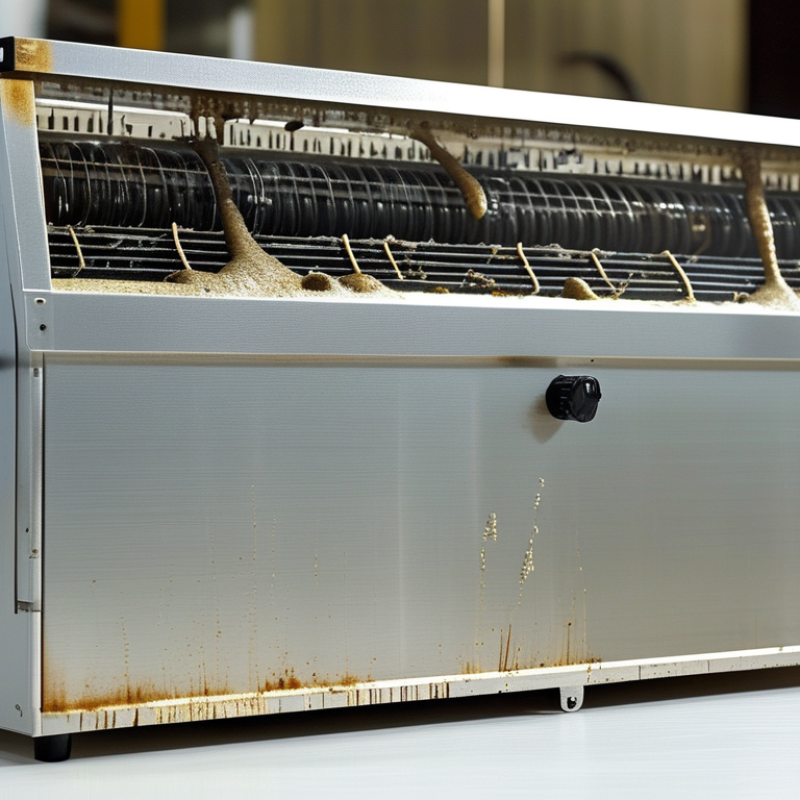
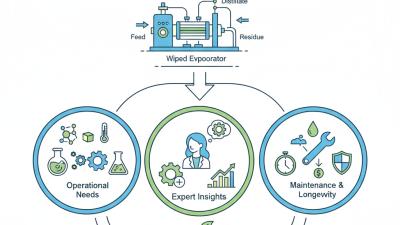
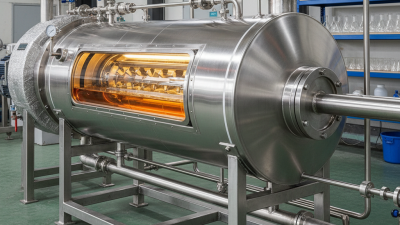
A horizontal wiped film evaporator is designed to remove volatile components from heat-sensitive or viscous materials. Its purpose is controlled evaporation, not simple boiling. Feed enters the heated cylindrical body and spreads across the inner wall. A rotating rotor continuously wipes the product into a thin, even film. This action improves heat transfer and shortens residence time. Vapors move toward the outlet, while the concentrated liquid leaves separately. Simple principle, demanding control.
Choosing the right unit requires understanding the feed and the process goal. Viscosity, solids content, moisture level, and thermal sensitivity all affect performance. A high-viscosity feed may need stronger wiping action and a larger heating surface. Pressure also matters because lower pressure can reduce boiling temperature. In practical operation, stable feed flow is essential. Sudden changes can create dry spots, flooding, or uneven concentration. Operators often focus on capacity, but maintenance access deserves equal attention. A perfect calculation may still fail in daily production.
Tips: Test the actual feed whenever possible. Record wall temperature, pressure, rotor speed, and outlet quality during trials. Inspect the wiped film pattern, not only the final concentration. Small adjustments often reveal more than aggressive heating. Allow extra design margin; real materials rarely behave exactly like laboratory samples.
Operating under vacuum lowers the boiling temperature of the feed, helping a horizontal wiped film evaporator process heat-sensitive materials. The chart shows approximate saturation temperatures for pure water at selected absolute pressures. Actual operating conditions depend on the product, solvent system, viscosity, heat-transfer limits, and required evaporation rate.
How to Choose the Right Horizontal Wiped Film Evaporator
Defining process requirements starts with the feed, not the equipment brochure. Record feed rate, solids content, viscosity, boiling range, and thermal sensitivity. Also measure changes during concentration. A liquid may become far more viscous near its target solids level.
The International Energy Agency reports that industry uses about 37% of global final energy. The U.S. Department of Energy also identifies process heating as roughly half of manufacturing energy use. These figures make heat-transfer efficiency a practical selection factor, not a minor detail. Specify operating pressure, heating-medium temperature, residence-time limits, and expected evaporation duty. Short residence time matters for polymers, nutraceutical extracts, and other heat-sensitive materials. Small details matter.
Material behavior requires equal attention. Check fouling tendency, crystallization risk, shear sensitivity, and corrosion exposure. Chlorides, acids, and abrasive solids can change the required metallurgy and rotor design. A smooth, continuously renewed film may improve heat transfer, but it cannot correct poor feed preparation. Do not guess.
Pilot testing should use the real formulation, including impurities and recycled streams. Laboratory results often look cleaner than plant conditions. Confirm outlet viscosity, residual moisture, product color, and cleaning time under vacuum. The National Association of Corrosion Engineers emphasizes that material selection depends on concentration, temperature, and contaminant combinations, not chemistry names alone. That is an easy point to overlook. A calculated value is not a guarantee.
How to Choose the Right Horizontal Wiped Film Evaporator
A horizontal wiped film evaporator should match the feed, not only the required capacity. In plant trials, I have found that viscosity changes can affect rotor torque, film thickness, and heat transfer. A rigid rotor may suit stable liquids, while a flexible wiping system can handle changing viscosity more gently. Compare these details carefully. They matter.
Equipment configuration also changes operating results. A single-stage unit may work for moderate concentration duties. Multi-stage arrangements can reduce thermal stress and improve solvent recovery. Check the heating surface area, rotor speed range, vacuum capability, and condenser load together. Selecting them separately is a common mistake. Feed distribution deserves equal attention. Poor distribution can create dry patches, fouling, and uneven residence time. I once underestimated cleaning access during an early equipment review. That decision increased maintenance time later.
Tips: Request pilot data using your actual feed. Measure viscosity at operating temperature. Review torque trends, wall temperature, residence time, and final concentration. Ask how quickly operators can inspect seals, rotor parts, and discharge zones. Also compare stainless steel grades, surface finish, gasket compatibility, and instrumentation. These choices support reliable operation and product quality. Do not rely only on brochure evaporation rates. Real feeds contain surprises. Language like “up to” needs careful interpretation. A sound selection process combines test results, mechanical limits, process safety reviews, and an honest maintenance assessment.
| Equipment Configuration | Typical Rotor Design | Typical Operating Conditions | Recommended Feed Characteristics | Key Advantages | Main Trade-Offs | Best-Fit Applications |
|---|---|---|---|---|---|---|
| Fixed-Blade Wiper | Rigid blades maintain a defined clearance from the heated wall. |
Vacuum: approximately 1–100 mbar absolute Wall temperature: commonly 80–250 °C Short to moderate residence time |
Low- to medium-viscosity liquids with relatively stable composition and limited solids. | Simple rotor construction, predictable film formation, and comparatively straightforward maintenance. | Less tolerant of large changes in viscosity, fouling, or wall irregularities than flexible systems. | Solvent recovery, thermal concentration, purification of moderately clean liquid feeds. |
| Hinged or Swinging Wiper | Pivoting blades generate wiping action while accommodating changes in film load. |
Vacuum: approximately 0.5–100 mbar absolute Wall temperature: commonly 80–250 °C Short residence time |
Medium- to high-viscosity feeds, including materials whose viscosity increases during evaporation. | Improved wall contact, good heat-transfer renewal, and better handling of variable viscosity. | More moving parts and greater sensitivity to incorrect clearance, rotor speed, or feed distribution. | Concentration of polymers, resins, oils, plasticizers, and other viscous products. |
| Spring-Loaded Wiper | Blades are pressed toward the heated surface by mechanical or spring loading. |
Vacuum: approximately 0.1–100 mbar absolute Wall temperature: commonly 80–250 °C Short residence time |
Fouling-prone, viscous, or moderately solids-bearing feeds requiring continuous surface renewal. | Strong wiping action, improved tolerance of minor wall deposits, and effective heat-transfer-surface renewal. | Higher wear potential, more demanding inspection, and possible product contamination from blade wear. | Heat-sensitive concentration, difficult-to-process organic liquids, and feeds with a tendency to form deposits. |
| Free-Hanging Wiper | Flexible or freely suspended blades use centrifugal force and liquid load to contact the wall. |
Vacuum: approximately 0.5–100 mbar absolute Wall temperature: commonly 60–220 °C Very short residence time |
Heat-sensitive liquids, low- to medium-viscosity feeds, and products requiring gentle treatment. | Gentle film formation, low mechanical complexity at the wiping interface, and reduced local overheating risk. | Performance can be affected by feed rate, rotor speed, viscosity, and poor liquid distribution. | Thermally sensitive chemicals, food ingredients, specialty oils, and high-value products. |
| Single-Stage WFE | One heated evaporation zone with one rotor and one vapor outlet. |
Typical evaporation duty: single-pass concentration or purification Vacuum selected according to boiling-point reduction Residence time generally measured in seconds to minutes |
Feeds requiring one primary evaporation or devolatilization step. | Lower capital cost, simpler controls, easier cleaning, and smaller footprint. | May not achieve the required final concentration or separation in one pass. | Initial concentration, solvent stripping, pilot-scale processing, and moderate separation duties. |
| Multi-Stage or Series WFE | Two or more evaporation zones arranged in series, sometimes with separate temperature or vacuum control. |
Multiple operating zones Progressive reduction of volatile content Longer overall processing path without necessarily increasing heat load in one zone |
Feeds requiring deeper concentration, staged devolatilization, or controlled removal of different volatile fractions. | Higher achievable concentration, better process control, and the ability to separate operating conditions by zone. | Higher equipment cost, more complex instrumentation, and greater cleaning and maintenance requirements. | Deep concentration, multicomponent solvent removal, polymer devolatilization, and demanding purification. |
| Horizontal Condenser-Integrated System | Evaporator connected directly to an external or integrated condenser and vacuum system. |
Condenser temperature selected below the vapor condensation point Vacuum stability depends on condenser capacity and non-condensable removal Often configured for continuous operation |
Feeds producing recoverable vapors or requiring controlled solvent collection. | Reduced vapor-line losses, improved solvent recovery, and compact process integration. | Condensation duty must match vapor load; fouling can reduce vacuum performance and heat-transfer capacity. | Solvent recovery, closed-loop processing, and continuous production systems. |
| Sanitary or Cleanable Configuration | Polished product-contact surfaces, drainable geometry, hygienic seals, and minimized dead zones. |
Operating temperature and vacuum depend on the product Cleaning method may include manual, COP, or validated CIP procedures Surface finish commonly specified by process requirements |
Products requiring strict hygiene, batch-to-batch changeover, or documented cleaning procedures. | Improved cleanability, lower cross-contamination risk, and easier validation of product-contact surfaces. | Higher fabrication cost and additional requirements for drainage, seals, spray coverage, and validation. | Food, nutraceutical, pharmaceutical, cosmetic, and high-purity chemical processing. |
Selection note: The operating ranges shown are typical engineering guidance rather than guaranteed equipment limits. Final sizing and configuration should be based on feed viscosity, boiling-point elevation, thermal sensitivity, solids content, fouling tendency, target evaporation rate, required residence time, vacuum level, and materials-of-construction requirements.
Choosing a horizontal wiped film evaporator requires more than comparing evaporation capacity. Track feed rate, outlet moisture, residence time, vacuum stability, and heat-transfer performance under realistic viscosity changes. The IEA’s Energy Efficiency 2023 report estimates that industry consumes about 37% of global final energy. Therefore, even small heating losses can become significant operating costs.
Maintenance details often decide long-term performance. Inspect wiper blades, mechanical seals, bearings, and condensers during scheduled shutdowns. A practical test is simple: record vibration, motor load, vacuum level, and product temperature each week. Rising motor load may indicate fouling or blade wear. It may not. That assumption needs testing. The U.S. Department of Energy’s Manufacturing Energy and Carbon Footprints identify process heating as a major industrial energy load, making insulation, heat recovery, and efficient vacuum control important purchasing criteria.
Safety evaluation should include pressure relief, hot-surface protection, electrical classification, emergency isolation, and safe cleaning procedures. Review credible guidance from OSHA and recognized process-safety standards, not only supplier brochures. Calculate total cost using energy, labor, spare parts, cleaning time, rejected product, and unplanned downtime. A lower purchase price can hide expensive seal failures. Ask for factory test data, but verify it with a pilot trial using your actual feed. Performance claims often look excellent on clean laboratory material. Real feed can foul, foam, or change viscosity unexpectedly.
Choosing a horizontal wiped film evaporator starts with the feed, not the equipment catalogue. In pilot work, viscosity often changes sharply as solvent leaves the product. A thin, continuously renewed film helps control residence time and reduces local overheating. This matters for heat-sensitive concentrates, oils, polymers, and pharmaceutical intermediates.
The U.S. Department of Energy’s Industrial Decarbonization Roadmap identifies process heating as roughly 51% of industrial energy use. That figure makes thermal efficiency a practical selection factor, not a marketing phrase. Compare evaporation capacity, heating-medium temperature, vacuum level, and expected fouling. The International Energy Agency also reports that process heat represents about 70% of industrial energy demand globally. Therefore, a small improvement in heat transfer can influence operating costs. Still, published capacity figures may not match your feed. Feed trials are essential.
Tips: Measure viscosity at several solids levels. Check whether crystals form near the outlet. Request material-balance data, residence-time results, and cleaning procedures. Consider a larger heating area only after confirming the real evaporation load. A compact unit may be efficient, but an undersized separator can carry droplets into the vacuum system. That mistake is easy to overlook. Reliable selection also includes seal compatibility, condenser duty, and maintenance access. Review your assumptions with an experienced process engineer before final sizing.
(Sources: U.S. Department of Energy, Industrial Decarbonization Roadmap, 2022; International Energy Agency, Energy Technology Perspectives, 2023.)