China Top Short Path Distillation Equipment Manufacturers?
China has become a major manufacturing base for separation, evaporation, and thermal processing equipment. Its short path distillation suppliers serve laboratories, pilot plants, and commercial production facilities. However, “top” should not mean the largest factory alone. It should mean dependable engineering, verified performance, and responsive technical support.
M. B. King, a recognized author on molecular distillation, described the process as “a special form of evaporation.” This principle remains important today. Short path distillation reduces the distance between the heated surface and condenser. That design can shorten residence time and limit thermal exposure. It is especially useful for heat-sensitive oils, botanical extracts, vitamins, and specialty chemicals.
The best Chinese manufacturers usually show more than polished brochures. They provide clear drawings, material certificates, vacuum data, condenser specifications, and documented test results. Look closely. A capable supplier should explain wiper design, feed distribution, sealing quality, cleaning access, and temperature control. These details affect actual output.
Manufacturing experience also matters. Ask whether the company has completed similar projects, not merely built one impressive demonstration unit. Request references, factory inspection options, and realistic capacity calculations. Claimed evaporation rates may change with viscosity, feed composition, and operating pressure. That part is often overlooked.
This article will examine leading China-based short path distillation equipment manufacturers through practical criteria. These include engineering capability, customization, quality control, after-sales service, and application experience. No supplier is perfect. Buyers should compare evidence, not promises. A careful evaluation can reduce costly redesigns, unstable vacuum operation, and disappointing product recovery.

What Is Short Path Distillation Equipment?
China Top Short Path Distillation Equipment Manufacturers?
Short path distillation equipment is a vacuum-based thermal separation system. It uses a heated evaporator, a nearby internal condenser, and a high-vacuum pump. The short distance reduces vapor travel and limits residence time. This design suits heat-sensitive industrial materials.
Under deep vacuum, boiling temperatures decrease. A wiped-film rotor spreads liquid into a thin layer across the heated surface. Volatile components evaporate, then condense within centimeters. Less thermal exposure can protect color, viscosity, and active fractions, although poor vacuum control may damage quality.
The U.S. Department of Energy reports that distillation can consume 40–60% of energy in chemical processing. Short path systems may reduce heat demand, but results depend on feed properties, condenser design, and operating discipline.
Tips:
Ask Chinese manufacturers for vacuum-leak testing, material certificates, temperature uniformity data, and residence-time records. Confirm whether the quoted capacity is feed rate or recovered output. Request a pilot trial with your real material. Laboratory data can mislead. Scale-up is not perfectly predictable. Hygienic designs often use stainless steel contact surfaces, polished welds, and cleanable seals. Experienced suppliers should explain these details clearly, not only show attractive specifications. The European Commission’s Best Available Techniques documents also emphasize energy efficiency, containment, and measurable process control when evaluating separation equipment.
How Short Path Distillation Systems Work
Short path distillation systems separate heat-sensitive compounds under deep vacuum. Their design reduces the distance vapors travel before condensation, limiting unwanted thermal exposure.
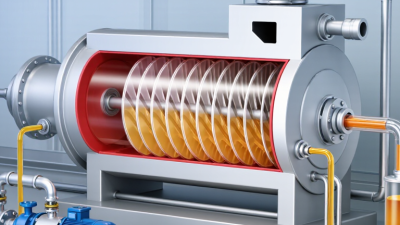
A feed enters a heated evaporator and spreads across the inner wall as a thin film. A rotating wiper improves distribution and helps prevent local overheating. Lighter vapor molecules move toward a nearby internal condenser, while heavier residues flow downward. The short vapor path reduces pressure loss and supports separation at lower boiling temperatures. This matters when prolonged heating could change color, aroma, viscosity, or purity.
Vacuum stability is critical. Even a small leak can raise the boiling temperature and weaken separation. Operators usually monitor feed rate, wall temperature, condenser temperature, rotor speed, and pressure continuously. Clean surfaces also matter because residue can reduce heat transfer and contaminate later batches. Practical experience shows that perfect settings rarely exist. A high rotor speed may improve film coverage but increase mechanical stress. A slower speed may protect delicate materials but leave uneven heating. Feed preparation, equipment geometry, and recovery targets must be evaluated together.
The condenser should remain visibly cooler than the evaporation surface. That simple check helps confirm vapor movement. Yet it is not enough alone. Sampling both distillate and residue provides stronger evidence of performance. Careful records make adjustments repeatable and reveal problems before they become expensive.
Key Features of China’s Leading Manufacturers
China’s leading short path distillation equipment manufacturers focus on controlled heat transfer, stable vacuum performance, and product purity. Their systems commonly use stainless steel or borosilicate glass contact surfaces, depending on process requirements. A compact evaporator can reduce residence time and protect heat-sensitive materials. That matters in real production.
Strong manufacturers provide customized wiped-film or short path designs, matched to viscosity, feed rate, and boiling behavior. Engineers should verify condenser area, jacket temperature range, vacuum depth, and scraper speed before ordering. Many factories support process testing with customer samples and record operating data during trials. Useful details include batch logs, material certificates, surface-finish reports, and vacuum leak-test results. Quality control is visible.
Reliable suppliers also maintain documented welding procedures, dimensional inspections, and pressure testing where applicable. Export experience helps with electrical standards, packaging, installation guidance, and replacement parts. Factory acceptance testing can reveal uneven rotor movement or unstable temperature control before shipment. However, catalog data is not enough. Some published capacity figures assume ideal feed conditions, which may not match a customer’s viscous or thermally sensitive material. Ask for comparable test records, not polished promises.
On-site training, remote troubleshooting, and clear maintenance schedules show practical experience. Spare seals should be identified by material and operating temperature. I would also check response times after commissioning. A technically impressive machine can still disappoint when support is slow. Manufacturers that welcome third-party inspection often appear more dependable, though inspection alone cannot replace process validation.
How to Evaluate Chinese Short Path Distillation Equipment Suppliers
Evaluating Chinese short path distillation equipment suppliers requires more than comparing prices. Request vacuum leak-rate records, condenser temperature curves, and material certificates. A reliable supplier should explain wiped-film speed, feed capacity, residence time, and recovery rates using test data. Ask for a factory acceptance test with your actual feedstock or a safe, representative substitute. Generic brochures are not enough.
Industry reports also require careful reading. The ISO Survey 2023 recorded more than one million ISO 9001 certificates worldwide, but certification alone does not prove process competence. Grand View Research and other 2024 market reports forecast continued growth in industrial separation equipment, although their market definitions differ. That difference matters. I would compare suppliers using the same specifications, warranty terms, and service-response targets. My own caution is simple: attractive energy claims often omit vacuum-pump power and cleaning time.
Tips: Check weld quality inside the evaporator. Request surface-finish measurements, not verbal assurances. Confirm whether seals, sensors, and heating components are locally available. Review commissioning records from similar capacities. A supplier should provide a clear P&ID, control philosophy, spare-parts list, and operator training plan. Also inspect the workshop, even by live video, because polished photographs can hide weak assembly practices. Keep every performance promise in the purchase contract.
How to Evaluate Chinese Short Path Distillation Equipment Suppliers
A practical procurement-weight model for comparing suppliers without relying on company or brand names. Higher scores indicate greater importance during technical and commercial evaluation.
The evaluation dimensions reflect commonly documented requirements for short path distillation systems: separation performance, vacuum capability, temperature control, material compatibility, throughput, automation, documentation, after-sales support, lead time, and total cost. Buyers should verify each item through drawings, test reports, factory acceptance testing, and service records.