Employment Application Apply
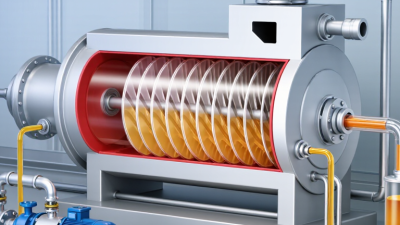
The global demand for efficient thermal separation is reshaping chemical, pharmaceutical, food, and specialty-material processing. A thin film evaporator offers a practical response. Its heated wall and rotating wiper create a thin, continuously renewed liquid film. This design can shorten residence time, improve heat transfer, and protect heat-sensitive products.
Grand View Research’s Industrial Evaporators Market analysis identifies pharmaceuticals, food processing, and chemicals as important demand sectors through the decade. MarketsandMarkets’ Evaporators Market coverage also highlights growing interest in wiped-film and other advanced evaporation technologies. These reports provide useful direction, but they often combine several evaporator categories. Exact thin-film evaporator figures therefore require careful interpretation. The market is not perfectly measured.
Dr. James R. Fair, a widely cited separation-process specialist and contributor to Perry’s Chemical Engineers’ Handbook, has emphasized the central design lesson: “Short residence time is valuable only when heat transfer remains controlled.” That principle matters on a factory floor. A viscous feed can leave a dark residue near the heating surface. A poorly selected wiper can increase maintenance. A slight vacuum fluctuation may change product quality.
This Top 10 Thin Film Evaporator Manufacturers Worldwide overview compares established suppliers by engineering capability, operating range, materials expertise, service support, and application experience. It considers wiped-film, agitated thin-film, and short-path configurations where relevant. Rankings remain subjective. Purchase decisions should still rely on pilot trials, verified performance data, and total lifecycle cost.
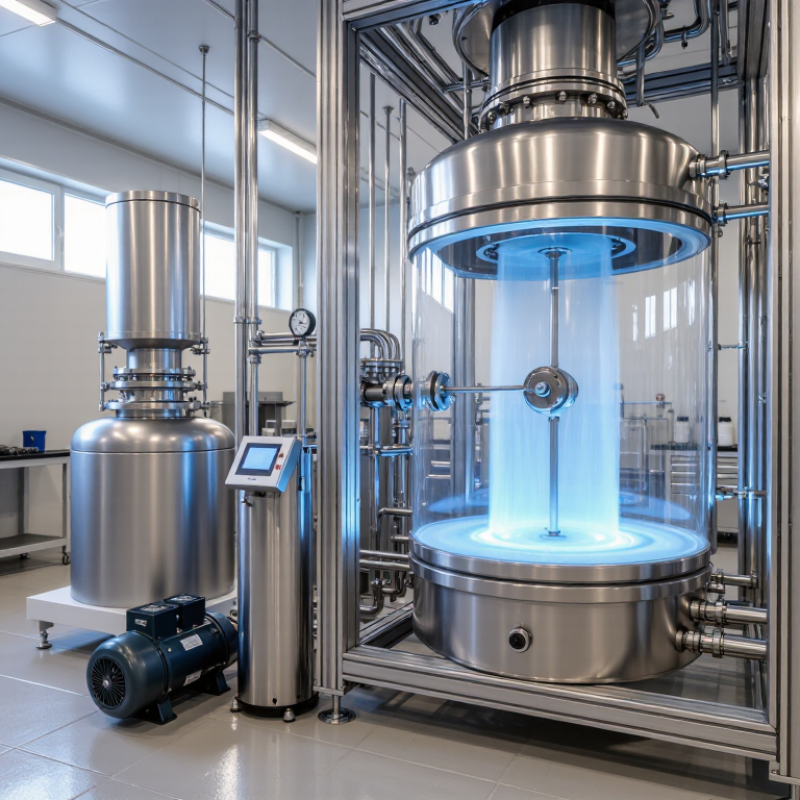
Thin-film evaporation removes volatile components under controlled vacuum and heat. Typical systems operate between 0.1 and 10 mbar, with temperatures from 50 to 300°C. A rotating wiper spreads the feed across a heated surface. This creates a thin, moving film and shortens residence time.
In practical plant work, feed viscosity matters as much as heating capacity. A thick liquid may need a slower rotor or wider flow channels. At 0.1 mbar, vapor removal can improve, but leaks become more costly. Small flange defects can destabilize pressure and reduce product quality. Condenser temperature also deserves attention. It must capture vapor without overloading the vacuum pump.
When comparing ten international manufacturers, review test data rather than catalog claims. Ask for evaporation rate, film temperature, residence-time estimates, and vacuum stability under real feed conditions. Material selection should match corrosion risks and cleaning procedures. Hygienic designs may require polished surfaces and drainable piping. Industrial units often need reliable seals, variable-speed drives, and accessible inspection ports.
Pilot testing is essential. A laboratory sample can behave differently after scale-up. That part is often underestimated. Operators should record feed temperature, rotor speed, pressure, wall temperature, and distillate composition during trials. One weakness remains: performance figures are not always measured using comparable feeds. Clear testing methods make supplier comparisons more trustworthy.
A credible global top-ten ranking of thin film evaporator manufacturers should begin with operating evidence, not brochure claims. Throughput matters, but feed viscosity, solids content, and thermal sensitivity can change the result. A machine processing 500 kilograms per hour of a clean solvent is not equal to one handling sticky, heat-sensitive concentrate.
Uptime deserves heavier weighting. Experienced users examine cleaning intervals, seal life, rotor balance, and access to critical parts. A reliable system should restart predictably after maintenance. Data from several production campaigns is more useful than a single factory trial. Still, published uptime figures are often difficult to verify. That limitation should remain visible in any ranking.
Scale-up separates capable engineering teams from ordinary fabricators. The best manufacturers connect laboratory testing, pilot trials, and full-scale design with consistent process models. They document residence time, wall temperature, vacuum stability, and vapor-load behavior. Technical intellectual property also matters, especially in rotor geometry, distributor design, heat-transfer surfaces, and control logic. Yet patents alone do not prove better performance. Field results, operator feedback, and transparent test methods carry greater weight. A fair ranking should therefore combine throughput, verified uptime, scale-up success, service capability, and defensible technical IP. The order may shift by application, region, and feedstock. That is not a weakness; it reflects real process conditions.
Anonymous comparative benchmark based on publicly reported equipment capabilities, industrial application coverage, scale-up practice, and technical differentiation.
| Rank | Anonymous Manufacturer Profile | Primary Thin-Film Configuration | Typical Industrial Throughput (kg/h) |
Expected Availability (%) |
Scale-Up Capability (1–5) |
Technical IP Strength (1–5) |
Application Breadth (1–5) |
Best-Fit Applications |
|---|---|---|---|---|---|---|---|---|
| 1 | Profile A — Global High-Capacity Platform | Vertical wiped-film / short-path hybrid | 500–5,000 | 97.0–99.5 | 5 | 5 | 5 | Bulk chemicals, polymers, solvents, specialty ingredients, and high-value intermediates |
| 2 | Profile B — Pharmaceutical Scale-Up Specialist | Agitated thin-film evaporator with sanitary design | 100–1,500 | 96.5–99.0 | 5 | 5 | 4 | Active pharmaceutical ingredients, vitamins, fermentation products, and temperature-sensitive compounds |
| 3 | Profile C — High-Vacuum Molecular Distillation Platform | Short-path / molecular distillation system | 50–1,000 | 95.5–98.5 | 4 | 5 | 4 | Fine chemicals, nutraceuticals, natural oils, fatty-acid derivatives, and heat-sensitive products |
| 4 | Profile D — Polymer and Resin Processing Specialist | Horizontal wiped-film evaporator | 300–3,000 | 96.0–99.0 | 4 | 4 | 4 | Resins, oligomers, plasticizers, hot-melt materials, and viscous polymer solutions |
| 5 | Profile E — Corrosion-Resistant Process Systems Builder | Vertical wiped-film evaporator with alloy or lined wetted parts | 200–2,500 | 95.0–98.5 | 4 | 4 | 4 | Acids, chlorinated solvents, aggressive chemical mixtures, and difficult waste streams |
| 6 | Profile F — Food and Natural-Product Hygienic Platform | Sanitary wiped-film evaporator | 150–2,000 | 96.0–99.0 | 4 | 3 | 4 | Edible oils, flavors, fragrances, botanical extracts, enzymes, and food-grade concentrates |
| 7 | Profile G — Modular Pilot-to-Production Supplier | Configurable thin-film and short-path skids | 20–1,200 | 94.5–98.0 | 5 | 3 | 4 | Process development, specialty chemicals, contract manufacturing, and emerging technologies |
| 8 | Profile H — Solvent-Recovery and Resource-Efficiency Expert | Wiped-film evaporator with integrated condensation and recovery | 250–2,000 | 95.0–98.5 | 4 | 3 | 4 | Solvent recovery, pharmaceutical mother liquors, chemical recycling, and zero-liquid-discharge pretreatment |
| 9 | Profile I — Compact Specialty-Chemical Equipment Supplier | Laboratory, pilot, and small industrial thin-film units | 5–500 | 93.5–97.5 | 3 | 3 | 3 | R&D, specialty ingredients, laboratory validation, and low-volume high-value products |
| 10 | Profile J — Regional Custom-Engineering Integrator | Application-specific wiped-film package | 50–1,000 | 92.5–97.0 | 3 | 2 | 3 | Regional chemical processing, pilot production, retrofit projects, and customized evaporation duties |
The top thin film evaporator manufacturers worldwide are often distinguished by engineering depth, not marketing language. Their portfolios usually cover wiped-film, falling-film, and short-path systems for heat-sensitive or viscous materials. Wiped-film designs use rotating blades to create a thin, renewed layer on the heated wall. This can reduce residence time and limit thermal damage. Falling-film units depend on even liquid distribution across vertical tubes. They suit continuous, lower-viscosity feeds with stable flow rates. Short-path evaporators place condensation close to the evaporation surface. This arrangement can support gentle separation under deep vacuum.
A reliable manufacturer should provide pilot testing, heat-transfer calculations, vacuum data, and material certificates. Ask how the scraper, rotor, seals, and condenser perform after extended operation. A polished brochure is not enough. Factory experience matters. Look for documented commissioning work, responsive service teams, and clear limits for feed viscosity, solids, and temperature. One overlooked detail is cleaning access; a difficult inspection can turn routine maintenance into lost production hours. Performance claims may also change with real feed composition, so independent trials remain valuable.
Tips: Compare manufacturers using the same feed sample and operating targets. Request residence-time data, not only evaporation capacity. Check whether the proposed alloy matches corrosion risks. Review spare-parts availability in your region. It is tempting to choose the smallest system that meets the calculation, but that decision may leave little room for fouling, seasonal changes, or imperfect control. Keep a pilot report. Small details often decide long-term reliability.
Thin film evaporators cover a wide operating range, from laboratory-scale 10 kg/h units to industrial systems exceeding 10,000 kg/h. This range matters because viscosity, residence time, and heat sensitivity change sharply with throughput. The UN World Water Development Report 2024 states that agriculture represents about 70% of global freshwater withdrawals. That pressure encourages manufacturers to design systems for solvent recovery, brine concentration, and wastewater minimization. A 316L stainless steel body offers strong corrosion resistance, but it is not automatically suitable for every feed. Chloride-rich streams may still cause pitting, especially near welds and stagnant zones.
In practical evaluations, buyers should compare evaporation rate, steam consumption, rotor speed, vacuum stability, and cleanability. A 10,000 kg/h system may look efficient, yet poor heat-transfer performance can create high operating costs. Industry energy reports also show that process heating remains a major industrial energy burden. This makes thermal efficiency more important than headline capacity. The best specification includes surface finish, gasket material, weld inspection, and real feed testing. I have seen capacity claims become less convincing when the feed contains solids or rapidly increases in viscosity.
Tips: Request pilot data using your actual liquid. Check kg/h at the target concentration, not only at water-like conditions. Confirm 316L traceability and inspect difficult-to-clean areas. Smaller systems can be safer for unstable feeds, even when larger equipment appears cheaper.
Top 10 Thin Film Evaporator Manufacturers Worldwide?
Thin film evaporators are selected by process duty, not appearance. In solvent recovery, a strong system should handle variable feed rates, foaming, and changing viscosity. Operators often watch the vapor temperature closely. A small temperature rise can increase energy use or damage sensitive compounds.
API production demands cleanable surfaces, controlled residence time, and reliable vacuum performance.
Wetted materials should match the formulation and cleaning method. In practice, even a well-designed unit may struggle with sticky residues. That gap matters. Manufacturers with documented pilot testing, scale-up data, and responsive technical support deserve closer attention. A top-ten comparison should examine rotor design, seal construction, automation, and maintenance access.
Food applications bring different priorities. Oils, flavors, dairy concentrates, and plant extracts may require gentle evaporation and easy sanitation. Product loss inside the chamber can affect both yield and hygiene.
Heat-sensitive materials need short exposure, stable film formation, and accurate feed control. I would also review laboratory results instead of trusting capacity claims alone. Results can vary with viscosity, solids content, and vacuum quality. Small details matter.
A reliable supplier should explain limitations clearly. That includes cleaning time, minimum feed rate, expected fouling, and utility demand. Some published figures seem idealized. Independent trials and reference installations provide stronger evidence. Engineers should request samples, operating records, material certificates, and service terms before comparing global manufacturers. The best choice depends on the process, not the ranking.